 boo@zjmgmm.com / 958587858@qq.com
 English
 русский
 Español
 عربى
عربى
Cell spacing is a small design detail with a significant influence on battery pack assembly, mechanical stability, and thermal management. At Zhejiang Mega Mei Machinery Co., Ltd. (Mega Mei), we understand that battery housing components must accommodate specific cell dimensions while supporting reliable installation and practical production requirements. A gap that is too narrow may complicate assembly or restrict the space needed for insulation, while excessive clearance can allow unwanted movement during operation.
For manufacturers developing electric bicycles, electric motorcycles, and other battery-powered equipment, the correct spacing depends on cell format, holder geometry, operating conditions, and the complete enclosure design. Our approach focuses on matching structural components to the intended battery configuration rather than applying a single spacing value to every project.
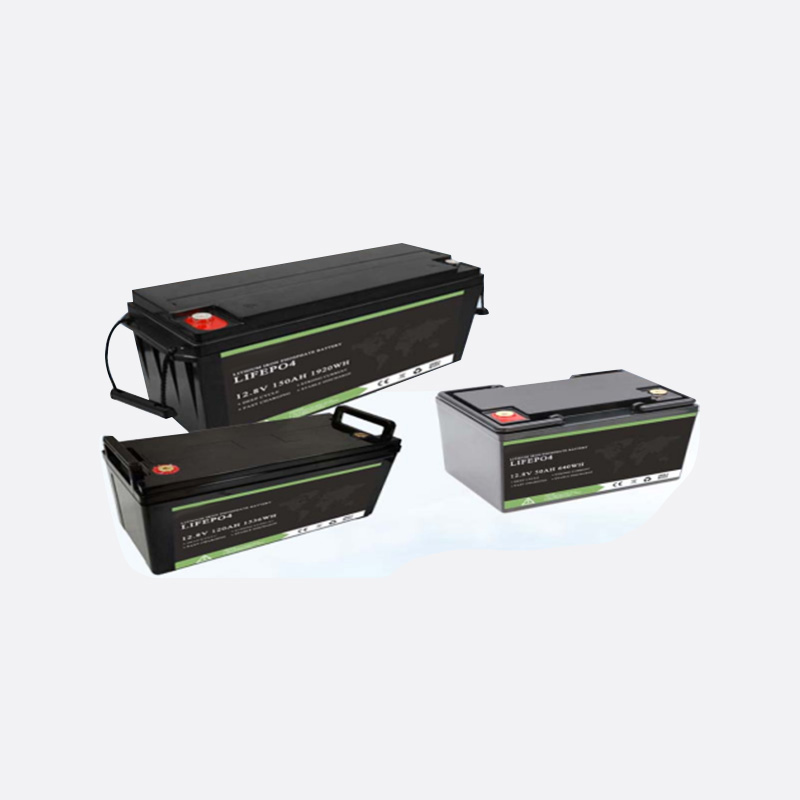
1. Why Does Cell Spacing Matter in Battery Pack Design?
The distance between neighboring cells affects several aspects of a battery assembly. A suitable layout must balance dimensional accuracy, insulation, heat transfer, and mechanical support.
- Mechanical stability: Appropriate clearances help the holder position each cell securely and reduce unwanted movement during transportation, installation, and vehicle operation.
- Electrical insulation: Space for insulating barriers and protective materials can help prevent unintended electrical contact between conductive components.
- Thermal management: Cell arrangement influences heat transfer and the available space for cooling features. A larger gap does not automatically provide better cooling; airflow, material conductivity, and the enclosure structure also matter.
- Assembly consistency: Proper dimensional allowances make it easier to insert cells without excessive force, deformation, or damage to protective coverings.
- Manufacturing tolerances: Cell diameter, holder dimensions, molding variation, and assembly conditions must be considered together to maintain consistent fit across production batches.
At Mega Mei, we consider the holder and battery enclosure as connected structural components. Their dimensions should be evaluated together so that the final assembly fits the intended application.
2. What Is the Appropriate Gap Between Lithium Battery Cells?
There is no universal spacing value that applies to every lithium battery pack. The required clearance depends on cell dimensions, chemistry, thermal design, insulation requirements, and the applicable safety specifications.
For cylindrical cells, engineers commonly distinguish between the distance from one cell center to the next and the actual open gap between adjacent cell surfaces. These measurements are different and should not be confused during product design or procurement.
- 18650 cylindrical cells: These cells have a nominal diameter of approximately 18 mm and a nominal length of approximately 65 mm. The holder must accommodate the actual dimensions and tolerances specified by the cell supplier.
- 21700 cylindrical cells: These cells have a nominal diameter of approximately 21 mm and a nominal length of approximately 70 mm. A holder designed around an 18650 layout cannot be assumed to fit this larger format.
- Pouch and prismatic cells: These formats require different dimensional considerations, including cell thickness, compression requirements, terminal clearance, and provision for any specified dimensional change during service.
Research on lithium-ion battery modules has examined cell-to-cell distances ranging from 20 mm to 40 mm between cell centers in particular cylindrical-cell layouts. Those figures describe specific experimental configurations, not a universal requirement for every battery pack. Actual spacing must be established through application-specific engineering analysis and validation.
For procurement projects, we recommend defining the cell model, nominal dimensions, dimensional tolerances, insulation arrangement, and required thermal performance before confirming the holder geometry. This information gives our team a clearer basis for evaluating compatibility.
3. How Should Buyers Calculate Holder Dimensions?
A practical dimensional assessment begins with the cell layout and then accounts for the surrounding structure. The following example illustrates the calculation for a single row of cylindrical cells.
Example: Ten cylindrical cells arranged in one row
- Number of cells: 10
- Nominal cell diameter: 18 mm
- Illustrative clear gap between adjacent cells: 2 mm
- Number of gaps: 9
The approximate width occupied by the cells and the nine gaps is:
10 × 18 mm + 9 × 2 mm = 198 mm
This 198 mm result represents the simplified width of the cell row only. It does not include the outer walls, holder ribs, end clearances, insulating barriers, wiring space, or assembly allowances. The 2 mm gap is an illustrative calculation input, not a recommendation for all cell types or battery applications.
For a production design, we assess the following additional dimensions:
- Cell diameter or thickness tolerances provided by the cell manufacturer.
- Holder wall thickness, retaining ribs, and contact surfaces.
- Space for cell terminals, busbars, protective insulation, and wiring.
- Clearance for assembly tools and battery module insertion.
- The enclosure's internal dimensions and mounting features.
Our engineering assessment should use actual component drawings rather than nominal cell dimensions alone. This helps reduce dimensional conflicts during prototype assembly and subsequent production.
4. How Do Material and Holder Structure Affect Spacing?
The spacing requirement cannot be separated from the material used to manufacture the holder. Different materials have different stiffness, thermal expansion, electrical insulation, and impact resistance characteristics.
Plastic holders and molded structures
Plastic holders can provide electrical isolation and flexible geometric design. Rib patterns, cell openings, retaining features, and integrated mounting points can be incorporated into the molded structure. However, the material grade must suit the intended temperature range, mechanical loads, and applicable flame-resistance requirements.
Reinforced structures and enclosure interfaces
Reinforced components may help maintain the intended geometry under mechanical loads. The design must still account for material expansion, molding tolerances, fastening points, and contact between the holder and enclosure.
At Mega Mei, our electric motorcycle battery housing product range includes ABS and PC/ABS enclosure options, along with structural brackets and related battery box components. The appropriate material and configuration depend on the intended application and the requirements agreed for each project.
Insulation and thermal barriers
Insulating sheets, protective sleeves, and thermal barriers occupy physical space. Their thickness must be included in the dimensional calculation rather than added after the holder geometry has been finalized. Thermal barriers may also change heat transfer between neighboring cells, so their placement requires engineering evaluation.
We recommend confirming the material grade, wall thickness, and insulation arrangement during the design review. These details help align the holder dimensions with the complete battery pack structure.
5. Which Tests Should Be Completed Before Mass Production?
A drawing review provides a useful starting point, but a prototype should also be evaluated under conditions representative of the intended application. At Mega Mei, we recommend agreeing on measurable acceptance criteria before moving from sample approval to volume production.
- Dimensional inspection: Measure the cell openings, spacing, overall holder dimensions, mounting positions, and enclosure interfaces against the approved drawings.
- Assembly verification: Confirm that the specified cells can be installed without excessive insertion force, damage to insulation, or unwanted pressure on terminals.
- Mechanical testing: Evaluate retention and structural integrity under application-relevant vibration, impact, and handling conditions.
- Thermal evaluation: Check temperature distribution under representative charging and discharging loads using the intended enclosure and cooling arrangement.
- Electrical safety checks: Verify insulation, clearances, and protection against unintended contact according to the applicable design and safety requirements.
- Production consistency: Inspect samples from production batches to confirm that molding dimensions and assembly fit remain within the agreed tolerances.
Test conditions should reflect the actual battery chemistry, cell configuration, current levels, enclosure materials, and operating environment. A holder that fits during a bench inspection may still require further evaluation under vibration or thermal loading.
6. How Can Mega Mei Support Battery Housing Projects?
Battery pack developers need components that fit their cell arrangements and integrate with the surrounding vehicle structure. Our work with electric motorcycle and e-bike battery box components covers enclosure-related parts, brackets, connecting pieces, and other structural elements.
Our Lithium Battery Cell Holder project discussions can begin with the intended cell format, required pack dimensions, installation method, and expected operating conditions. These details help us assess whether an existing component configuration is suitable or whether a customized design should be considered.
To support an effective technical review, buyers can prepare the following information:
- Cell type, model number, and dimensional drawing.
- Battery pack layout, cell count, and arrangement.
- Required internal and external enclosure dimensions.
- Material, insulation, and flame-resistance specifications.
- Mounting points, connector positions, and wiring requirements.
- Expected operating temperatures and applicable validation standards.
Our team can use these project details to discuss component compatibility, sample evaluation, material options, and manufacturing requirements. Clear technical information at the quotation stage also helps reduce unnecessary drawing revisions and avoidable fitment issues during assembly.
Treat Cell Spacing as a Verified Design Parameter
Cell spacing should be determined by the complete battery design rather than by a generic numerical guideline. Cell dimensions, insulation thickness, holder geometry, thermal behavior, manufacturing tolerances, and enclosure interfaces all contribute to the required clearance.
At Mega Mei, we focus on understanding these requirements before confirming a battery housing component configuration. By reviewing drawings, checking prototype fit, and agreeing on appropriate validation procedures, we can work with OEM customers and component buyers toward a consistent manufacturing result. Contact our team with your cell specifications and housing drawings to discuss suitable battery box components for your project.

 English
  Building 33, Demonstration Park, No. 318 Chenguang Road, Eastern New District, Wenling City, Taizhou City, Zhejiang Province, China
  0086-576-86337978
  0086-576-86333878
 boo@zjmgmm.com