 boo@zjmgmm.com / 958587858@qq.com
 English
 русский
 Español
 عربى
عربى
Why does the Inches Rack Standard Backup Battery matter for backup battery selection?
The 19-inch rack standard emerged in the mid-20th century as telecommunications and computing equipment moved toward standardized mounting systems. Before this standardization, equipment from different manufacturers required custom mounting solutions, complicating installation and maintenance. The adoption of the 19-inch rack format allowed for predictable space planning, improved airflow management, and simplified equipment replacement. For backup batteries, compliance with this standard means the units can be integrated into existing rack infrastructure without requiring custom brackets or modifications.
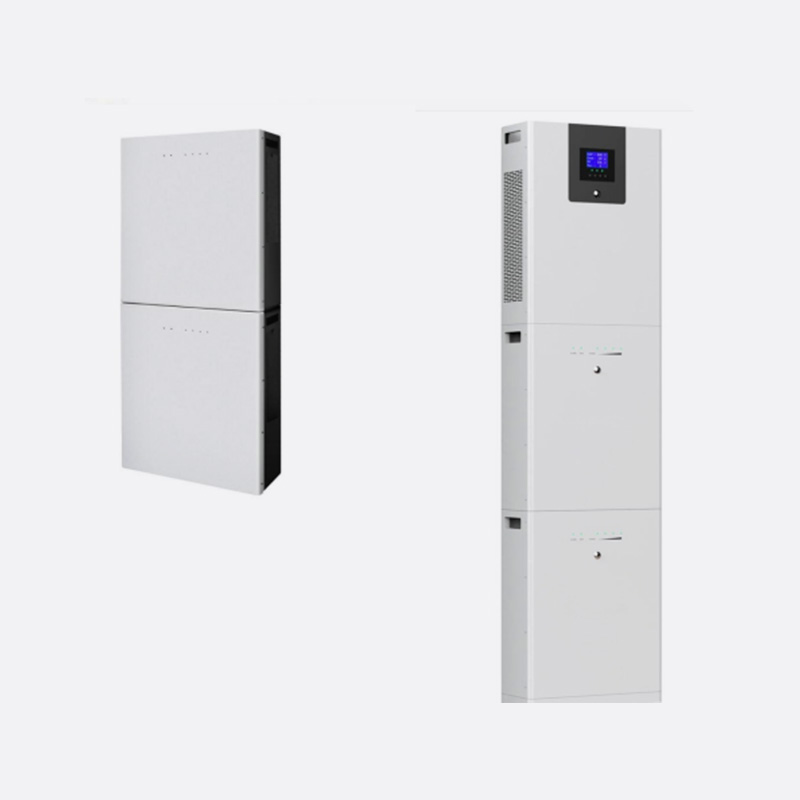
Why the rack standard matters for backup batteries:
Space efficiency: Data center and telecom facilities are designed around the 19-inch rack footprint. Backup batteries that conform to this standard utilize floor space that is already allocated to rack infrastructure rather than requiring separate floor-mounted battery cabinets. This is particularly important in colocation facilities where space is billed by the rack.
Thermal management: Rack enclosures are designed with airflow patterns—typically front-to-back cooling—that maintain operating temperatures for installed equipment. Rack-mount backup batteries are designed to fit within these airflow patterns, with ventilation openings positioned to align with rack cooling systems. Non-standard batteries may disrupt airflow, creating hot spots that reduce battery life or affect adjacent equipment.
Cable management: Rack enclosures incorporate vertical and horizontal cable management channels that organize power and data cabling. Rack-mount batteries are designed with power input and output connections positioned to align with these management systems, reducing cable clutter and simplifying maintenance.
Seismic and structural requirements: Rack enclosures in seismic zones are anchored to floors and ceilings with specific load ratings. Rack-mount batteries are designed to distribute weight evenly across the mounting rails and to meet the weight limits specified for the enclosure. Exceeding these limits or using non-standard mounting hardware can compromise seismic compliance.
The rack unit height of backup batteries varies by capacity and voltage. Common configurations include:
1U units: Typically provide 500 VA to 1,500 VA capacity with battery runtime of 5 to 15 minutes at full load. Used for individual servers, network switches, and small equipment clusters.
2U to 3U units: Provide 1,500 VA to 3,000 VA capacity. Used for storage arrays, server clusters, and telecommunications equipment.
4U to 6U units: Provide 3,000 VA to 6,000 VA or higher. May include extended battery modules for longer runtime. Used for critical infrastructure, data center rows, and large network deployments.
What are the critical differences between line-interactive and double-conversion (online) rack backup batteries?
Rack-mount backup batteries employ two primary topologies—line-interactive and double-conversion—that differ fundamentally in how they condition power and respond to utility irregularities. Understanding these differences is essential for selecting the appropriate technology for specific equipment and applications.
Line-interactive topology
Line-interactive backup batteries maintain the connected equipment on utility power during normal operation, with an inverter in standby mode. A automatic voltage regulation (AVR) circuit adjusts for undervoltage (brownout) and overvoltage conditions without switching to battery. When utility power fails, a transfer switch activates the inverter, typically within 2 to 10 milliseconds.
Efficiency: Line-interactive units achieve higher operating efficiency—typically 95 to 98 percent—because power passes directly to connected equipment without continuous double conversion. This efficiency reduces heat generation and operating costs.
Transfer time: The brief transfer time (2 to 10 milliseconds) is acceptable for IT equipment, which can tolerate momentary power interruptions due to onboard capacitor storage. However, equipment with high inrush currents or sensitive timing circuits may experience disturbances during transfer.
Power conditioning: AVR corrects voltage variations within ±10 to 20 percent of nominal, but frequency variations (common with generator power) are not corrected. Harmonic distortion from utility power passes through to connected equipment.
Applications: Suitable for servers, network equipment, storage arrays, and general IT infrastructure where power quality is generally stable and brief transfer times are acceptable.
Double-conversion (online) topology
Double-conversion units continuously convert utility AC power to DC, then invert DC back to AC. Connected equipment runs entirely from the inverter output, with the utility serving only to charge the batteries and supply the inverter. When utility power fails, there is zero transfer time because the inverter is already powering the load.
Power quality: Double-conversion units output pure sine wave power at stable voltage and frequency regardless of utility conditions. They eliminate all power disturbances, including sags, surges, spikes, noise, and frequency variations. Output specifications are typically ±2 percent voltage regulation and ±0.1 percent frequency regulation.




 English
  Building 33, Demonstration Park, No. 318 Chenguang Road, Eastern New District, Wenling City, Taizhou City, Zhejiang Province, China
  0086-576-86337978
  0086-576-86333878
 boo@zjmgmm.com