 boo@zjmgmm.com / 958587858@qq.com
 English
 русский
 Español
 عربى
عربى
Global demand for mechanical control systems continues to expand across automotive, motorcycle, industrial machinery, and mobility equipment sectors. Within this structure, a Brake Cable Parts Company must balance precision manufacturing with the ability to replicate consistent quality across multiple regions. Scaling globally is no longer a simple export activity; it requires synchronized production systems, standardized engineering protocols, and stable material sourcing.
Brake cable assemblies remain highly sensitive components, where minor deviations in structure or friction behavior can directly affect safety performance and user experience. This makes global expansion more complex compared with many other mechanical parts industries.
Fragmented production networks shape global expansion
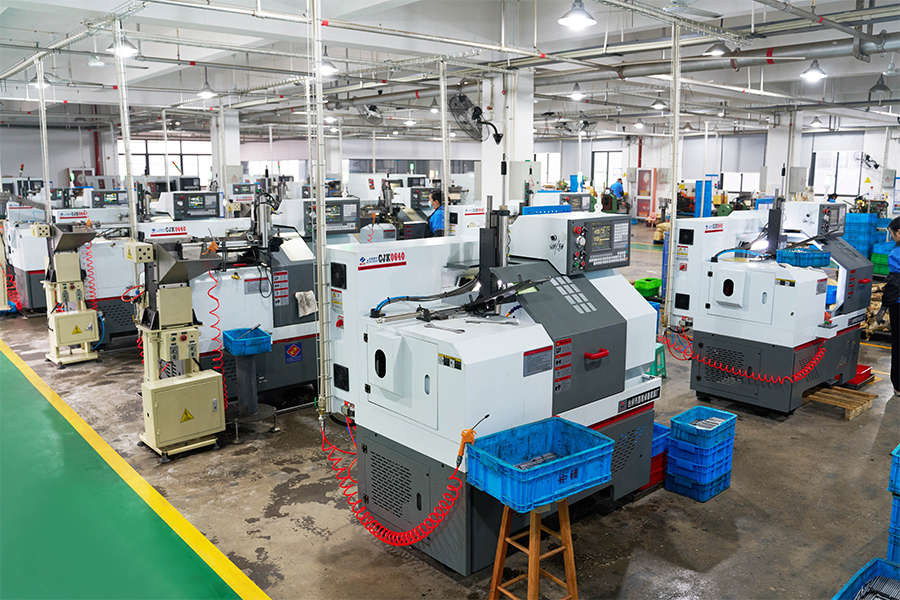
Most Brake Cable Parts Producer operations are no longer centralized in a single facility. Instead, production networks are distributed across different regions to align with OEM assembly plants.
Common global structure patterns include:
- Core manufacturing base in Asia for wire drawing and extrusion
- Regional assembly hubs near automotive OEM plants in Europe and North America
- Local warehousing systems to support JIT and JIS delivery models
- Secondary processing centers for customization and packaging
This structure reduces shipping delays but increases coordination complexity across quality systems and inventory synchronization.
Industry data shows that cable assembly suppliers serving OEM markets often operate in multi-country setups to comply with delivery precision requirements and platform-specific configuration rules.
Outer casing customization becomes a scaling bottleneck
Outer protective layers represent one of the most customized segments in brake cable systems. An Outer Casing OEM/ODM workflow typically involves multiple engineering iterations before final approval.
Technical customization areas include:
- Internal liner material selection (PTFE, POM, or hybrid low-friction polymers)
- Spiral reinforcement density adjustment for compression resistance
- External jacket composition for UV and chemical exposure resistance
- Diameter calibration ranging commonly between 4.0 mm and 15 mm
Performance benchmarks often targeted in OEM projects:
- Friction stability deviation below 8% over lifecycle testing
- Compression resistance above 500–800 N depending on application
- Temperature tolerance from -40°C to +120°C
- Tensile consistency across batch production exceeding 95% repeatability
Scaling these specifications globally requires identical tooling and strict process replication across factories, which becomes a limiting factor for rapid expansion.
OEM collaboration defines global competitiveness
Global scaling is heavily dependent on OEM integration capability. Automotive and industrial buyers typically require suppliers to operate within strict qualification frameworks.
Key OEM requirements include:
- Multi-stage validation testing before mass production approval
- Process audits based on ISO 9001 or IATF 16949 systems
- Traceability documentation covering raw wire batches to finished assemblies
- Long-term lifecycle support tied to vehicle platform production cycles
These conditions mean that scaling is not driven by demand alone but by qualification acceptance across multiple OEM platforms.
A Brake Cable Parts Company must therefore invest in engineering documentation systems and digital quality tracking to support cross-border compliance.
Supply chain synchronization challenges
Global scaling introduces one of the most complex issues in brake cable production: synchronization of material and process standards.
Typical challenges include:
- Variation in steel wire tensile strength between regional suppliers
- Inconsistent polymer extrusion behavior due to climate differences
- Tool wear differences affecting outer casing diameter precision
- Lead time mismatch between assembly and OEM production schedules
To manage these issues, manufacturers often deploy centralized specification control systems, where every regional factory follows identical process parameters and inspection routines.
Even small variations in coating thickness or spiral density can affect cable response feel, making standardization essential.
Material engineering as a global consistency factor
Material consistency is one of the strongest determinants of global scalability. Brake cable systems rely on a combination of high-carbon steel wires and engineered polymer housings.
Typical material stack includes:
- Inner wire: high-carbon steel with tensile strength above 1800 MPa
- Lubrication layer: micro-coating for friction reduction
- Outer casing: multi-layer PVC, nylon, or hybrid composite shell
- Reinforcement: steel spiral or fiber reinforcement mesh
OEM programs increasingly require low-friction behavior under both dry and wet conditions, which places pressure on material suppliers to maintain identical compound formulas across regions.
Logistics and regional production alignment
Global scaling also depends on proximity to end markets. Many suppliers now adopt regional production alignment strategies rather than centralized export models.
Key advantages of regional production:
- Reduced transportation time for just-in-sequence delivery
- Lower risk of inventory mismatch with OEM assembly lines
- Faster response to engineering change requests
- Reduced customs and cross-border compliance complexity
However, this model increases capital requirements and demands strict replication of production environments across multiple facilities.
Risk management in global scaling
As brake cable systems are safety-related components, scaling introduces additional risk control requirements.
Common risk control measures:
- Dual sourcing of steel wire and polymer compounds
- Redundant tooling systems across factories
- Batch-level traceability for recall management
- Continuous audit cycles from OEM quality teams
A failure in consistency can affect entire vehicle platforms, making risk control a central part of scaling strategy rather than a secondary concern.
Strategic outlook for global Brake Cable Parts Company operations
Companies operating in this sector generally follow three scaling paths:
- Export-focused model with centralized production and global shipping
- Regional manufacturing model aligned with OEM assembly plants
- Hybrid system combining centralized engineering with decentralized production
Each model carries different trade-offs between cost control, flexibility, and qualification complexity.
Market structure analysis shows that cable assembly suppliers increasingly move toward regionalized manufacturing to meet OEM delivery precision requirements and reduce logistical friction.

 English
  Building 33, Demonstration Park, No. 318 Chenguang Road, Eastern New District, Wenling City, Taizhou City, Zhejiang Province, China
  0086-576-86337978
  0086-576-86333878
 boo@zjmgmm.com