 boo@zjmgmm.com / 958587858@qq.com
 English
 русский
 Español
 عربى
عربى
The global brake cable industry sits at the intersection of precision engineering and strict automotive qualification systems. Companies working as brake cable parts producers operate in a space where technical capability alone is not enough. Entry into OEM supply chains depends on validation cycles, material traceability, and long-term program stability. These requirements shape how a Brake Cable Parts Company competes, scales, and survives across different vehicle platforms.
Rather than a simple component trade, the market behaves like a controlled ecosystem where each supplier must prove consistency under repeated stress testing and regulatory review.
OEM qualification cycle reshapes supplier entry
A large portion of brake cable manufacturing is tied to OEM platform approvals. Suppliers must pass multi-stage validation programs before any mass production contract is awarded.
Typical requirements include:
- 12–24 month approval timelines for OEM programs
- Fatigue testing under repeated pull-load conditions
- Salt spray exposure tests for corrosion resistance
- Temperature cycling from around -40°C to +120°C
- Dimensional tolerance control within tight micrometer ranges
These conditions mean that a Brake Cable Parts Producer does not simply manufacture and ship; it must demonstrate repeatability across thousands of cycles. According to industry market structure analysis, OEM supply contracts are often locked for the full vehicle lifecycle once approval is granted, which creates stability but raises entry difficulty significantly.
Material engineering pressure inside outer casing systems
Outer protection layers play a decisive role in cable reliability. Modern Outer Casing OEM/ODM projects often involve multi-layer extrusion systems rather than single-material housings.
Common structures include:
- Inner low-friction liner (often PTFE or modified polymer blends)
- Reinforced mid-layer using spiral steel or composite fibers
- Outer jacket made of PVC, TPE, or nylon-based compounds
Key technical targets:
- Friction coefficient reduction below 0.15 in controlled conditions
- UV resistance beyond 1,000-hour accelerated exposure
- Compression strength above 500 N without deformation
- Cold flexibility down to -30°C without cracking
Industry suppliers increasingly move toward PVC-free and silicone-free formulations to meet environmental and compatibility requirements seen in advanced automotive assemblies .
This shift increases complexity for OEM/ODM cooperation because material selection is no longer standardized across platforms.
Manufacturing precision defines competitiveness
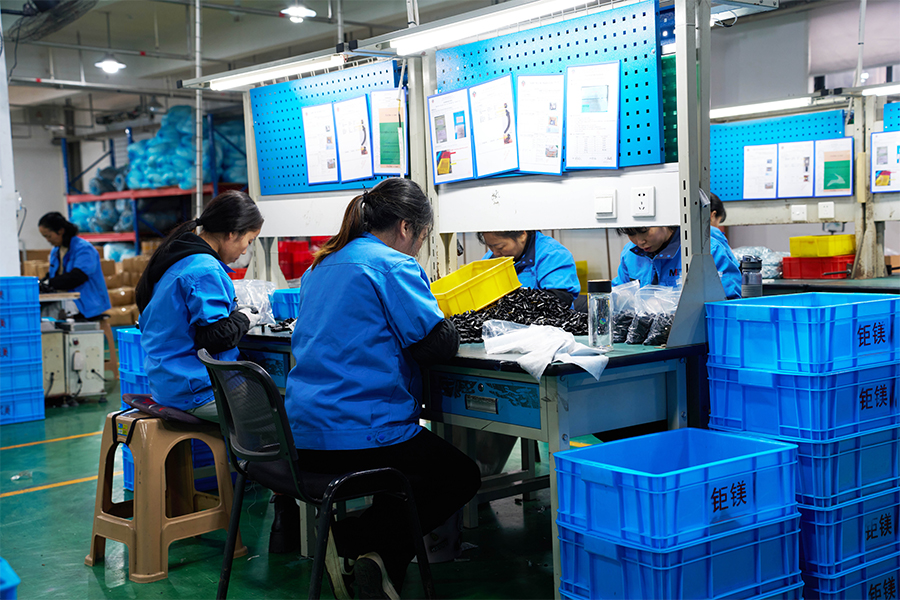
Brake cable production depends heavily on micro-level consistency. A typical production line integrates multiple controlled processes:
- High-carbon steel wire drawing with diameter accuracy ±0.01 mm
- Multi-strand twisting for load distribution stability
- Polymer extrusion at controlled melt temperatures between 180–230°C
- Swaging or crimping of end fittings under calibrated force systems
- Automated pull-force testing at every batch stage
Even small variations in strand tension can affect pedal feel or parking brake responsiveness. Many Brake Cable Parts Company operations invest in inline tension monitoring systems to maintain consistent response behavior across long production runs.
This level of precision is one reason OEM buyers prioritize suppliers with certified process control systems such as IATF 16949 compliance frameworks.
OEM barrier structure extends beyond engineering
Entry barriers are not limited to manufacturing capability. They extend into organizational readiness and supply chain integration.
Key non-technical requirements include:
- Full traceability from steel wire batch to finished cable assembly
- Digital quality documentation compatible with OEM ERP systems
- Regional manufacturing proximity to support just-in-sequence delivery
- Financial capacity to absorb tooling and validation costs before volume starts
OEM platforms often require suppliers to invest heavily upfront without guaranteed production volume. This shifts risk from automakers toward component producers during the qualification phase.
In practice, many suppliers only recover these investments after several years of stable production contracts.
Supply chain regionalization adds another constraint
Modern automotive supply networks are increasingly localized. Brake cable production is often positioned near vehicle assembly hubs rather than centralized in global factories.
This structure creates:
- Shorter logistics loops (often under 300 km radius)
- Reduced inventory buffering at OEM plants
- Higher demand for synchronized delivery schedules
- Increased exposure to regional regulatory differences
A Brake Cable Parts Producer must therefore manage multiple smaller production sites rather than one centralized facility. This decentralization increases operational complexity but improves OEM integration efficiency.
Performance reliability remains the final gatekeeper
Despite all structural barriers, technical reliability is still the decisive factor. Brake cable systems must maintain consistent force transmission under long-term mechanical stress.
Key performance indicators include:
- Pull efficiency loss below 5% over lifecycle testing
- No sheath cracking after repeated flex cycles exceeding 50,000 movements
- Stable friction behavior under wet and dry conditions
- Resistance to contamination from oil, salt, and road debris
These requirements ensure that even minor defects are unacceptable, as braking systems are directly tied to vehicle safety outcomes.
Strategic positioning in a constrained market
Companies operating in this field typically follow one of three paths:
- Full OEM-integrated supplier with long qualification cycles
- Specialized manufacturer focusing on high-precision cable assemblies
- Hybrid producer serving both OEM and aftermarket channels
Each model depends on balancing certification cost, production scalability, and engineering depth.
The Brake Cable Parts Company landscape continues to evolve as material innovation, localization pressure, and validation intensity increase. However, the structural barriers ensure that only suppliers with strong engineering discipline and long-term investment capacity can remain active in OEM programs.

 English
  Building 33, Demonstration Park, No. 318 Chenguang Road, Eastern New District, Wenling City, Taizhou City, Zhejiang Province, China
  0086-576-86337978
  0086-576-86333878
 boo@zjmgmm.com