 boo@zjmgmm.com / 958587858@qq.com
 English
 русский
 Español
 عربى
عربى
The global energy storage and mobility transition has pushed Cylindrical Cells Supply into a more complex stage of development. What was once a relatively stable component market for consumer electronics has expanded into electric vehicles, power tools, energy storage systems, and industrial equipment. This expansion is reshaping how suppliers manage capacity, chemistry selection, and long-term contracts.
A Cylindrical Cells Supply network today is no longer defined by simple production volume. It is shaped by energy density upgrades, supply security concerns, and qualification cycles that can span multiple years before stable demand is secured.
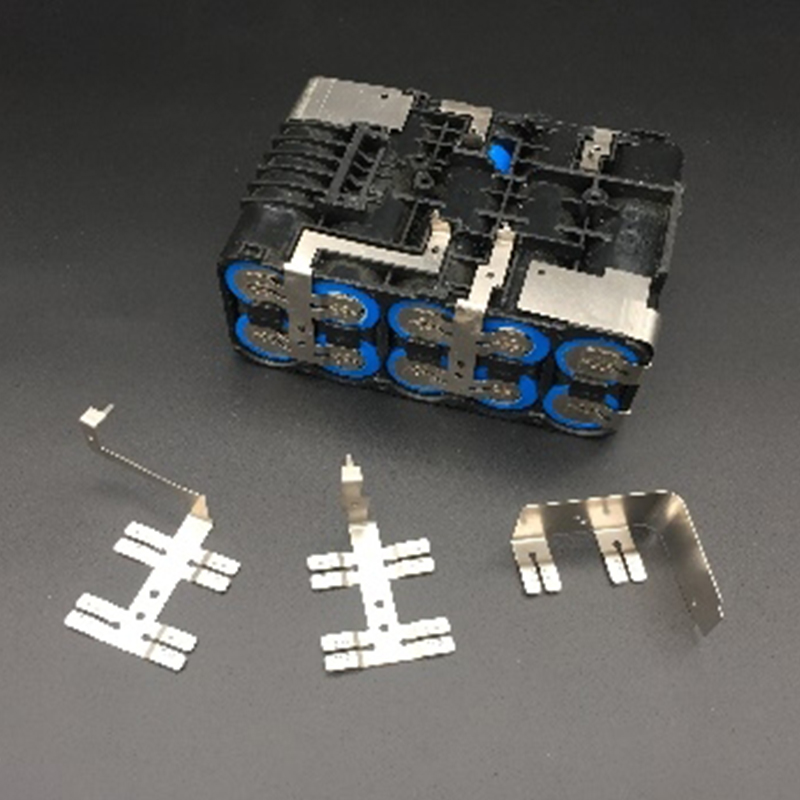
Demand structure is moving toward high-capacity formats
Market adoption patterns show a clear shift from smaller legacy formats toward higher-capacity cylindrical cells. Traditional 18650 cells still maintain strong usage in established applications, but newer 21700 configurations are gaining momentum due to improved energy density and reduced pack complexity.
Key technical differences influencing demand:
- 18650 typical capacity: 2,500–3,600 mAh
- 21700 typical capacity: 4,000–5,000+ mAh
- Higher volumetric efficiency reducing number of cells per pack
- Fewer welding points in battery assemblies improving reliability
Recent industry analysis shows cylindrical battery demand growing rapidly, with EV and industrial applications accounting for a significant share of total consumption. Market expansion is supported by energy transition programs and increased electrification across transport systems.
This shift means supply chains are no longer balanced evenly across formats; production capacity is increasingly concentrated in fewer but larger cell types.
Supply stability depends on raw material volatility
Cylindrical cell production is tightly linked to upstream materials such as lithium carbonate, nickel, cobalt, and graphite. Price fluctuations in these materials directly affect supplier output strategies.
Common supply-side constraints include:
- Lithium price volatility affecting long-term contract stability
- Nickel purity requirements for high-energy cathode systems
- Graphite anode sourcing limitations in certain regions
- Quality grading differences between battery-grade and industrial-grade materials
These factors force Cylindrical Cells Supply companies to maintain diversified sourcing networks rather than relying on single-region procurement.
Recent market behavior shows that raw material price spikes can shift procurement behavior toward established cell formats with predictable manufacturing economics, reinforcing the importance of supply chain resilience.
Manufacturing consistency becomes a core competitive filter
Unlike earlier commodity battery markets, cylindrical cell production now requires extremely tight process control. Even small variations in electrode coating or winding tension can affect long-term cycle stability.
Typical production controls include:
- Electrode coating thickness accuracy within micrometer-level tolerance
- Cell winding alignment precision to avoid internal stress concentration
- Electrolyte filling consistency across high-speed automated lines
- Formation cycling protocols to stabilize SEI layer development
Scientific studies on large-format cylindrical cells indicate that internal inhomogeneities can accelerate aging behavior and contribute to lithium loss during repeated cycling, making production consistency a critical performance factor rather than a cosmetic quality metric .
This level of sensitivity increases qualification requirements for suppliers and extends validation timelines for OEM adoption.
Application diversification reshapes supply priorities
Cylindrical cell demand is no longer concentrated in one industry. Instead, it spans multiple application layers:
- Electric vehicles requiring high-energy-density 21700 formats
- Power tools demanding high discharge-rate cells
- Energy storage systems prioritizing cycle life and thermal stability
- Consumer electronics relying on cost-optimized 18650 supply
Each application requires different trade-offs between energy density, discharge performance, and thermal management.
This diversification forces suppliers to maintain multiple production lines with different chemistry configurations such as NMC, NCA, and emerging silicon-enhanced anodes. It also increases the complexity of inventory planning across global distribution networks.
Qualification cycles reshape supply timelines
Cylindrical cells used in industrial or automotive applications require extensive qualification before entering mass production programs.
Typical validation stages include:
- Electrical performance testing under varying load conditions
- Thermal runaway resistance evaluation
- Vibration and mechanical shock testing
- Long-term cycling stability analysis over thousands of charge cycles
These qualification cycles often extend beyond 12 months, meaning supply decisions must be made far ahead of actual production demand.
As a result, Cylindrical Cells Supply companies increasingly operate on forecast-based production models rather than immediate order fulfillment systems.
Geographic distribution of supply is becoming more fragmented
Global supply chains are shifting away from centralized production toward regionalized manufacturing networks.
Key structural changes include:
- Asian production hubs focusing on large-scale cell manufacturing
- Regional assembly centers closer to EV and ESS production sites
- Local inventory buffers to reduce shipping delays
- Cross-border logistics optimization for high-value battery shipments
This fragmentation reduces delivery risk but increases coordination complexity across quality assurance systems and regulatory compliance frameworks.
Technology upgrades influence long-term supply direction
Cell technology evolution is also shaping supply patterns. Industry development trends include:
- Transition toward higher energy density cylindrical formats
- Introduction of silicon-enhanced anodes for capacity improvement
- Exploration of tabless electrode designs for reduced resistance
- Improvements in fast-charging capability without reducing cycle life
At the same time, manufacturers must balance innovation with manufacturability. New designs often require retooling production lines and revalidating entire supply chains, which slows adoption even when technical benefits are clear.
Strategic outlook for Cylindrical Cells Supply networks
The supply ecosystem is gradually splitting into three strategic models:
- High-volume standardized production focused on 18650 legacy demand
- Advanced high-density 21700 supply aligned with EV and energy storage markets
- Specialized small-batch production for niche industrial applications
Each model carries different requirements for capital investment, certification depth, and customer integration capability.
Long-term competitiveness depends less on output scale alone and more on the ability to maintain stable quality across fluctuating material markets and evolving application requirements.

 English
  Building 33, Demonstration Park, No. 318 Chenguang Road, Eastern New District, Wenling City, Taizhou City, Zhejiang Province, China
  0086-576-86337978
  0086-576-86333878
 boo@zjmgmm.com