 boo@zjmgmm.com / 958587858@qq.com
 English
 русский
 Español
 عربى
عربى
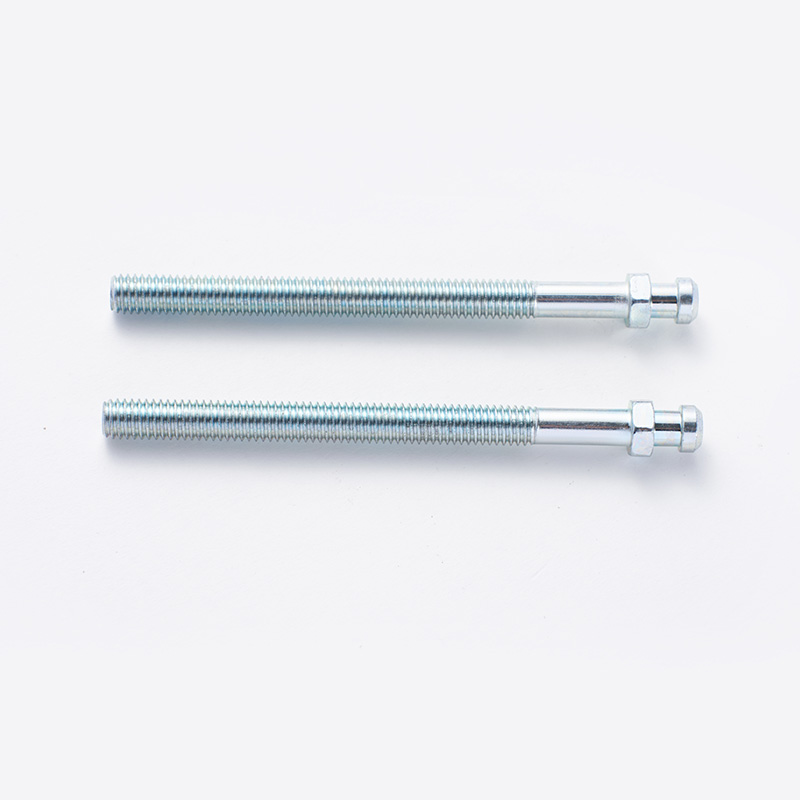
Threaded long screw rods are widely used in motor-driven applications, including linear actuators, precision positioning systems, CNC machines, and industrial automation equipment. They provide reliable motion transmission, strong load capacity, and relatively simple installation. However, like any mechanical component, threaded long screw rods also have limitations and specific considerations that users should understand.
What Are the Drawbacks of Threaded Long Screw Rods for Motors?
Threaded long screw rods offer effective motion transmission, but they also have several drawbacks that may affect performance and long-term reliability. One of the primary limitations is wear and friction. As the screw rod rotates and moves the nut, friction occurs between the threads. Over time, this friction can cause thread wear, reduce accuracy, and increase backlash. In applications requiring high precision, this wear can bring about positioning errors and reduced operational stability.
Another drawback is efficiency loss due to friction, especially in systems without lubrication or with poor lubrication. Increased friction bring about higher motor load, greater power consumption, and heat generation. In high-speed or continuous operation, this heat can further accelerate wear and reduce the service life of the screw rod.
Threaded long screw rods are sensitive to misalignment. If the screw rod and nut are not aligned correctly, uneven load distribution can occur, causing premature wear or even bending of the screw rod. This is particularly important for long screw rods, as they are more susceptible to deflection under load.
Threaded long screw rods require regular maintenance. Lubrication, cleaning, and inspection are necessary to maintain performance. In dusty or corrosive environments, contamination can accelerate wear and damage threads, reducing the service life of the entire system.
Threaded Long Screw Rods for Motors: What Can We Know?
Understanding threaded long screw rods involves recognizing their structure, application conditions, and performance characteristics. The following points summarize key knowledge for users and engineers:
Thread types and lead accuracy
Threaded long screw rods are available in various thread types, such as trapezoidal threads, ACME threads, and ball screw threads. Trapezoidal threads are common for general load applications, while ball screw threads offer higher efficiency and lower friction.
Load capacity and rigidity
Screw rods must match the load and rigidity requirements of the system. Longer screw rods may experience bending or deflection under load, so selecting an appropriate diameter and material is crucial.
Lubrication and maintenance needs
Regular lubrication reduces friction and wear. Depending on the operating environment, lubrication intervals may vary. In high-speed or heavy-load applications, more frequent maintenance is necessary.
Backlash and precision
Backlash is the gap between the screw rod and nut when changing direction. It affects positioning accuracy. Precision nuts and preloaded systems can reduce backlash, improving accuracy.
Installation alignment
Proper alignment between the screw rod, nut, and motor shaft is essential. Misalignment can cause uneven wear, increased friction, and premature failure.
Compatibility with motors
Screw rods are often paired with stepper motors, servo motors, or DC motors. Choosing the correct motor torque, speed, and driver ensures smooth operation and performance.
Selecting the Right Screw Rod for Your Motor System
Choosing the appropriate threaded long screw rod requires evaluating application needs, including load, speed, precision, and environmental conditions. For general industrial applications, trapezoidal threads provide a balance between strength and cost. However, for high-speed or high-precision systems, ball screw rods are often preferred due to their high efficiency and lower friction. The lead of the screw rod determines the linear movement per rotation; a larger lead provides faster motion but may reduce torque and control.
Material selection is also important. Stainless steel screw rods are suitable for environments with moisture or corrosion risk, while carbon steel rods may be suitable for indoor industrial use. The diameter and length must support the expected load without excessive deflection. For long stroke applications, consider adding support bearings or guide rails to maintain stability and reduce bending.
Maintenance Practices for Long-Term Reliability
Threaded long screw rods require regular maintenance to ensure stable operation. Lubrication is essential to reduce friction and prevent wear. Depending on the operating environment, choose appropriate lubricants such as grease or oil, and establish a lubrication schedule. In dusty or dirty environments, protect the screw rod with covers or bellows to prevent contamination.
Inspection should include checking for wear, backlash, and alignment. If the system shows signs of increased noise, vibration, or reduced accuracy, it may indicate thread wear or misalignment. Correcting alignment and replacing worn nuts or rods can restore performance. For systems with heavy loads or frequent operation, consider using preloaded nuts to reduce backlash and improve precision.

 English
  Building 33, Demonstration Park, No. 318 Chenguang Road, Eastern New District, Wenling City, Taizhou City, Zhejiang Province, China
  0086-576-86337978
  0086-576-86333878
 boo@zjmgmm.com