 boo@zjmgmm.com / 958587858@qq.com
 English
 русский
 Español
 عربى
عربى
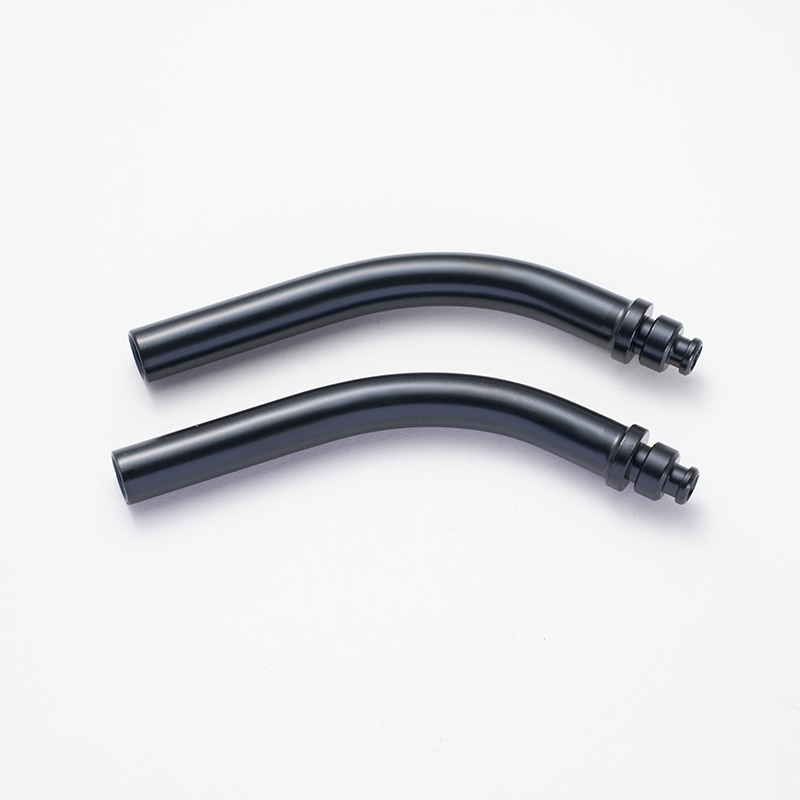
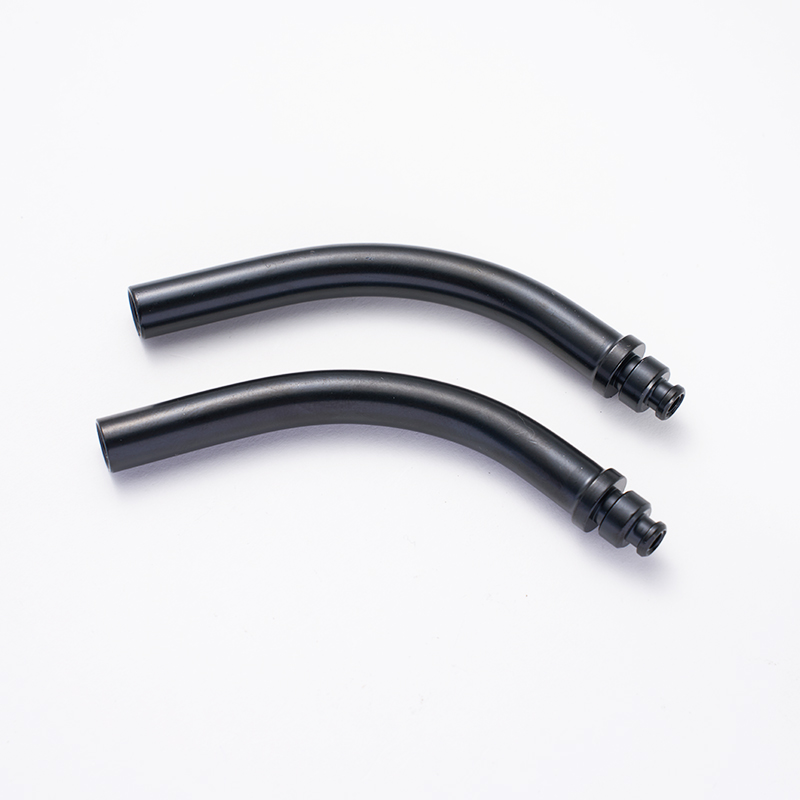
Throttle feel irregularity often traces back to small angular deviations inside cable routing hardware rather than changes in engine behavior. A compact interface like a Universal Motorcycle Throttle Cable Elbow plays a structural role in guiding pull direction, and even slight angle shifts can reshape how input force is transferred from grip to throttle body.
Mechanical data from cable component catalogs shows common elbow angles such as 80°, 90°, 130°, and 180°, each designed to stabilize cable direction under different frame layouts.
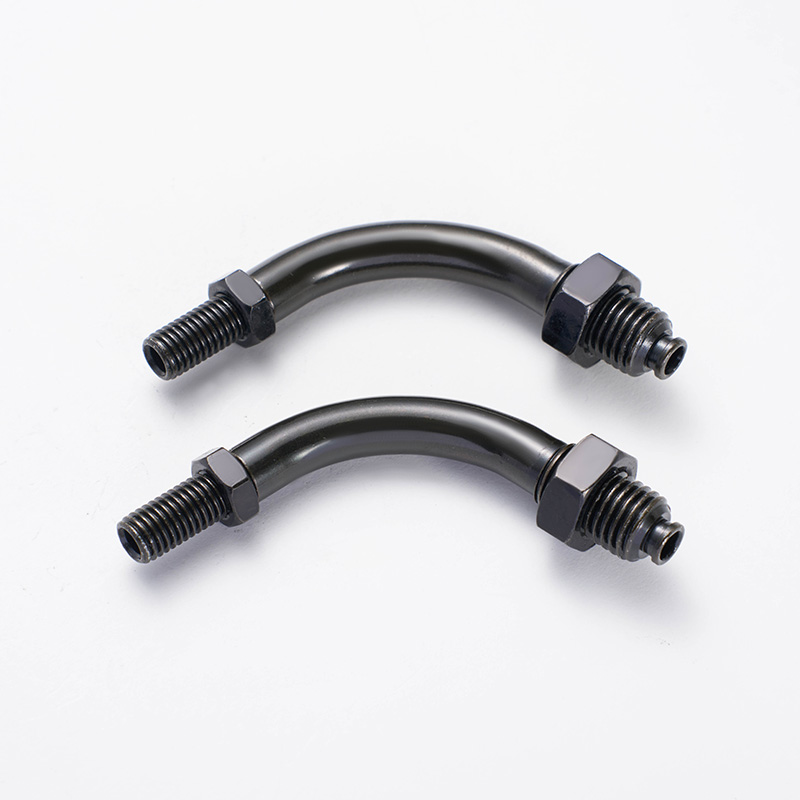
Angular deviation impact on throttle response stability
- Force vector misalignment occurs when elbow angle differs from original routing geometry, reducing linear pull efficiency.
- Inner wire side loading increases friction against housing walls under non-axial tension paths.
- Return spring delay amplification appears when cable exit angle resists natural rebound motion.
- Grip rotation inconsistency develops due to uneven tension distribution across throttle stroke.
These effects rarely appear instantly. Instead, they accumulate gradually, becoming noticeable during partial throttle control where precision sensitivity is higher.
Elbow geometry and directional force conversion
The throttle system converts rotational input into linear cable displacement. Any angular transition point acts as a directional converter, and its geometry directly influences how smoothly this conversion occurs.
Standard elbow components are designed to reduce abrupt directional shifts by maintaining a controlled bend radius. Industry examples show threaded or snap-in elbows integrating PTFE liners and steel housings to stabilize motion under repeated load cycles.
- Tight-angle elbows concentrate stress at entry and exit points, increasing localized wear.
- Wide-angle elbows reduce bending stress but may require additional space, affecting routing layout.
- Non-standard orientation introduces asymmetric pull behavior across the steering movement range.
Grip response inconsistency during steering movement
One overlooked factor is how steering rotation interacts with cable elbow position. As handlebars turn, the elbow angle relative to the frame changes slightly, altering effective cable tension. This creates variation in throttle resistance depending on steering direction.
- Left-turn preload increase can tighten cable path and reduce free play.
- Right-turn slack expansion may introduce temporary lag before throttle engagement.
- Neutral alignment window narrowing reduces stable throttle zone at center steering position.
This behavior is especially noticeable on modified handlebars or aftermarket control assemblies where original routing geometry is altered.
Material stiffness interaction with angular load
Elbow housings vary in rigidity depending on construction materials such as reinforced polymer, chrome-plated steel, or composite blends. Stiffer materials maintain geometry under load but transmit more vibration into the cable system, while more flexible housings absorb vibration but may slightly deform under tension.
- Housing micro-flex changes cable centerline alignment during acceleration bursts.
- Vibration coupling increases internal friction at elbow junctions.
- Thermal expansion shift modifies clearance tolerance under extended riding periods.
System-level interpretation of inconsistent grip feedback
Grip inconsistency rarely originates from a single mechanical point. Instead, it reflects interaction between elbow geometry, cable tension balance, and steering movement. A small angular mismatch at the elbow can cascade through the system, altering perceived throttle smoothness without obvious physical failure.
Testing examples from aftermarket throttle assemblies show that even minor deviations in elbow orientation can change perceived stroke smoothness, especially in low-speed modulation where rider sensitivity is highest.
Operational observation insight
During real riding conditions, inconsistency tends to appear intermittently rather than constantly. Road vibration, steering correction, and suspension rebound all interact with elbow geometry, making response feel uneven across different riding phases. Once alignment stabilizes, feedback often returns closer to expected behavior, reinforcing the importance of precise installation of Universal Motorcycle Throttle Cable Elbow systems in maintaining consistent grip response characteristics.

 English
  Building 33, Demonstration Park, No. 318 Chenguang Road, Eastern New District, Wenling City, Taizhou City, Zhejiang Province, China
  0086-576-86337978
  0086-576-86333878
 boo@zjmgmm.com