 boo@zjmgmm.com / 958587858@qq.com
 English
 русский
 Español
 عربى
عربى
How can you tell a cell is failing before it fails?
Lithium-ion cells fail in three main ways, each with warning signs. Understanding these can help you replace a cell before it becomes a safety risk.
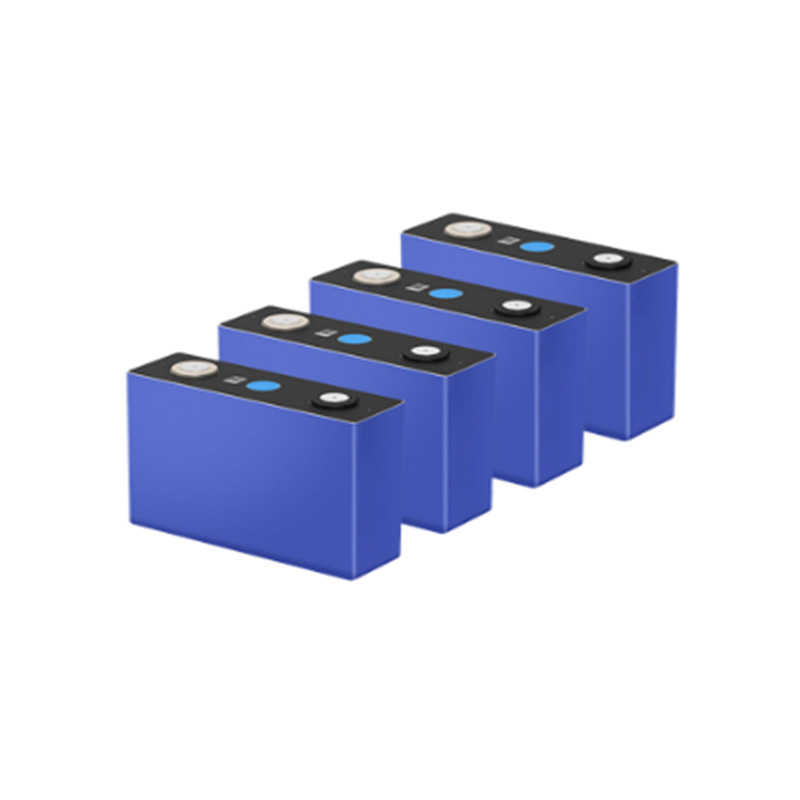
Internal short circuit (most dangerous). This happens when the separator (a thin plastic membrane between the anode and cathode) gets punctured by a manufacturing defect (a metal particle smaller than 0.1 mm) or by dendrites (tiny lithium metal spikes that grow through the separator over time). The short causes rapid self-discharge and heating. Warning signs: the cell voltage drops faster than others in a pack (e.g., other cells at 3.9V, this one at 3.2V). More telling—the cell gets warm when just sitting unused (above 35°C by touch). If the cell is in a device and you notice one battery compartment is warmer than others, that's a warning. A fully developed short will drain the cell below 2.0V. At that point, charging the cell can cause it to vent (pop a safety valve) or catch fire because the short becomes an internal heater. Typical resistance of a developing short is 100–500 ohms (a normal cell has near-infinite resistance at rest). You cannot measure this without disconnecting cells, but a large voltage difference between adjacent cells in a pack is the best real-world clue.
Loss of capacity (normal aging). This is not dangerous, just annoying. After 300–500 full charge-discharge cycles, a cylindrical lithium cell retains about 70–80% of its original capacity. Warning signs: a laptop that used to run for 6 hours now runs for 3 hours. An e-bike that went 40 miles now goes 28 miles. The cell charges to 4.2V but discharges quickly. Loss of capacity is caused by the solid electrolyte interphase (SEI) layer thickening on the anode, consuming some of the lithium inventory. Capacity fade is predictable; a cell at 70% of its original capacity is near end-of-life but not hazardous. The cell can continue to be used for low-demand applications (like a backup light) until it reaches 50–60% capacity.
What is the safest way to charge and discharge cylindrical lithium cells?
Lithium cells are not like old NiMH or lead-acid batteries. They need specific voltage limits. Follow these rules for the longest life and safest operation.
Never discharge below 2.5V per cell (absolute minimum). For most cells, the safe lower limit is 2.8V. Below 2.5V, copper from the anode current collector can dissolve into the electrolyte. When you recharge, the copper plates back onto the anode in uneven clumps, causing micro-shorts. A cell that has been discharged to 2.0V once might still work, but its internal resistance will be higher. A cell that has sat at 1.5V for a month should be recycled—do not attempt to recharge it. Most battery management systems (BMS) cut off discharge at 2.8–3.0V per cell. If you use a simple device without a BMS (like a flashlight), stop using it when the light dims noticeably and recharge immediately.
Never charge above 4.2V per cell (for standard cells). Some high-voltage cells go to 4.35V, but those are special. Charging to 4.3V on a standard 4.2V cell reduces cycle life by about 50%—200 cycles instead of 400. Charging to 4.4V risks lithium plating on the anode (metallic lithium forms instead of intercalating into the graphite), which is permanent capacity loss and creates dendrites. A quality lithium charger cuts off at 4.20V ±0.02V. A cheap charger might go to 4.25–4.30V. That extra 0.1V reduces total cycle life by 30–40%.
Do not fast charge every day. A 0.5C charge rate (e.g., charging a 2000 mAh cell at 1000 mA) takes about 2.5 hours and is gentle. A 1C charge (2000 mA) takes 1.5 hours and is fine for occasional use. Charging at 2C (4000 mA) takes 45 minutes but reduces cycle life by 30–40%. For cells that you use daily (phone, laptop, e-bike), charge at 0.5C overnight. For emergency use, 1C is acceptable. Most cylindrical cells have a maximum charge rate of 1C printed in their datasheet; exceeding that will cause accelerated degradation.
How does a user interpret the capacity rating printed on a cylindrical cell?
The capacity printed on a cell (e.g., 2600 mAh, 3500 mAh, 5000 mAh) is measured under specific conditions that may not match your use. Understanding the conditions helps you set realistic expectations.
Standard measurement conditions: The manufacturer discharges the cell from 4.2V down to 2.5V or 2.8V at a constant current of 0.2C (e.g., 500 mA for a 2500 mAh cell) at 25°C. Under those conditions, a 2500 mAh cell delivers about 2500 mAh. Change any of those conditions, and the delivered capacity changes.
The effect of discharge rate (current draw). If you discharge the same 2500 mAh cell at 1C (2500 mA), you might get 2300–2400 mAh—a 4–8% loss. At 2C (5000 mA), you might get 2000–2100 mAh—a 16–20% loss. The loss happens because high current causes a voltage sag. The cell hits the 2.5V cutoff voltage sooner, even though there's still charge remaining in the cell. So a high-drain device (power tool, vape, leaf blower) will get less effective capacity than a low-drain device (flashlight, wall clock).
The effect of temperature: At 0°C (32°F), a 2500 mAh cell delivers about 2000–2200 mAh (12–20% loss). At -10°C (14°F), capacity drops to 1500–1800 mAh (28–40% loss). At 60°C (140°F), capacity might be 2400–2450 mAh (only a small loss), but cycling at high temperature degrades the cell quickly. So an e-bike battery in winter will feel like it has much less range—that's normal. Bringing the battery inside to warm before use (if you can) restores the capacity.
The effect of cutoff voltage: If your device stops at 3.0V per cell instead of 2.8V, you leave about 5–10% of the capacity unused. That's a design choice to prolong battery life. A flashlight that dims and cuts off at 3.0V is protecting the cell; a device that goes all the way to 2.5V gets more run time but stresses the cell more.

 English
  Building 33, Demonstration Park, No. 318 Chenguang Road, Eastern New District, Wenling City, Taizhou City, Zhejiang Province, China
  0086-576-86337978
  0086-576-86333878
 boo@zjmgmm.com