 boo@zjmgmm.com / 958587858@qq.com
 English
 русский
 Español
 عربى
عربى
Understanding the internal construction of a Cylindrical Lithium-Ion Cell explain its performance characteristics and safety features. These cells are sophisticated electrochemical systems packaged in a rugged metal housing.
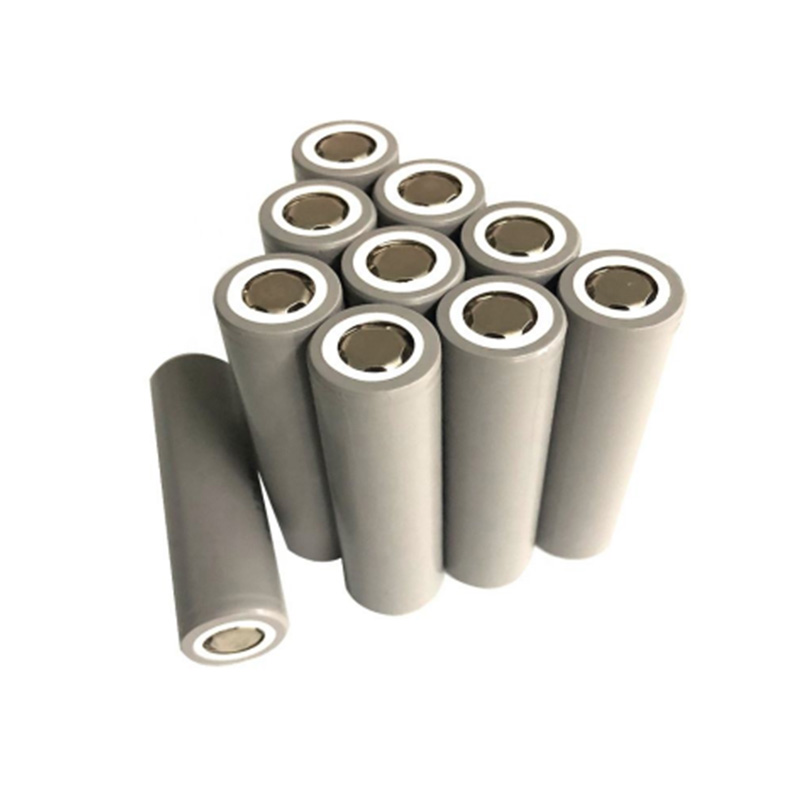
The Outer Can: Steel or Aluminum
The cylindrical shape is contained within a metal can, typically made from nickel-plated steel or aluminum.
Steel provides high mechanical strength and is commonly used in cells destined for power tools and electric vehicles where vibration and physical stress are factors.
Aluminum is lighter and used in applications where weight savings are prioritized, though it offers slightly less mechanical protection than steel.
The can itself serves as the negative terminal of the cell in most cylindrical formats.
The Internal Structure: The Jelly Roll
Inside the metal can is a spirally wound structure often called a "jelly roll." This consists of thin layers of material wound tightly together.
The positive electrode (cathode) is coated onto a thin aluminum foil current collector. The cathode material varies by chemistry but is typically a lithium metal oxide such as Lithium Cobalt Oxide (LCO) , Lithium Manganese Oxide (LMO) , Lithium Nickel Manganese Cobalt Oxide (NMC) , or Lithium Iron Phosphate (LFP) .
The negative electrode (anode) is coated onto a thin copper foil current collector. The active material is almost always graphite, though some cells incorporate silicon compounds to increase energy density.
Between the electrodes is a separator, a thin porous membrane made from polyethylene or polypropylene. This separator prevents electrical contact between the electrodes while allowing lithium ions to pass through.
The entire jelly roll is saturated with a liquid electrolyte, which is a lithium salt (such as LiPF6) dissolved in a mixture of organic solvents.
Safety Devices
Cylindrical cells incorporate multiple safety features. A positive temperature coefficient (PTC) device increases resistance if the cell overheats, reducing current flow.
A current interrupt device (CID) permanently disconnects the cell if internal pressure builds to unsafe levels.
Vent discs are designed to rupture at a controlled pressure, releasing gas safely if the internal pressure becomes too high.
Key Advantages of Cylindrical Cells:
Mechanical robustness: The metal can and cylindrical shape provide excellent resistance to internal pressure and external stress.
Manufacturing consistency: Decades of development have produced highly automated production lines with tight quality control.
Thermal management: The cylindrical shape allows for cooling channels between cells in large battery packs.
Standardization: Common sizes (18650, 21700, 4680) enable interchangeability and supply chain efficiency.
Key Limitations:
Space utilization: When packed together, cylinders leave gaps between cells, reducing volumetric efficiency compared to prismatic or pouch cells.
Thermal gradients: Heat generated at the core of the jelly roll must travel through multiple layers to reach the surface.
What Do the Numbers in Cell Names Mean (18650, 21700, 4680)?
The naming convention for cylindrical lithium-ion cells follows a straightforward code that describes their physical dimensions. This standardization allows manufacturers and users to understand exactly what size cell they are working with.
The 18650 Format:
The numbers "18650" indicate the cell's dimensions: 18mm in diameter and 65.0mm in length.
This format originated in the early days of lithium-ion battery commercialization and became the standard for laptop battery packs.
An 18650 cell typically has a capacity ranging from 1,500mAh to 3,500mAh depending on the chemistry and generation of technology.
These cells have been produced in billions of units, making them the most common cylindrical format with established supply chains.
The 21700 Format:
"21700" indicates 21mm in diameter and 70.0mm in length.
This format was developed to provide higher capacity and better power delivery than the 18650 while maintaining similar manufacturing efficiencies.
A 21700 cell typically offers capacities from 4,000mAh to 5,000mAh.
The format gained prominence when Tesla adopted it for their electric vehicles in partnership with Panasonic, though it is now widely used across the industry.
The 4680 Format:
"4680" indicates 46mm in diameter and 80.0mm in length.
This newer, larger format represents a significant departure from previous generations. The larger diameter allows for a different internal construction (tabless design) that reduces internal resistance and improves thermal performance.
A single 4680 cell has approximately five to six times the capacity of an 18650 cell, reducing the number of cells needed in a large battery pack.
The format also reduces the proportion of inactive materials (casing, terminals) relative to active materials, potentially improving energy density at the pack level.
Other Common Formats:
26650: 26mm diameter, 65.0mm length. Used in some power tools and flashlights.
14500: 14mm diameter, 50.0mm length. Similar size to a standard AA alkaline battery.
32700: 32mm diameter, 70.0mm length. Used in some energy storage applications.
How Should Cylindrical Cells Be Handled and Used Safely?
Lithium-ion cells contain significant energy in a small volume and use flammable materials. Proper handling and usage practices are essential for safety.
General Handling Precautions:
Cylindrical cells should not be subjected to physical abuse. Denting, puncturing, or crushing the metal can can cause internal short circuits bring about thermal runaway.
Cells should be kept away from conductive materials that could bridge the positive and negative terminals. Loose cells in a pocket or container can short against keys or coins.
The original packaging should be maintained until cells are ready for use. Many cells ship with insulated rings or caps protecting the terminals.
Charging Considerations:
Cylindrical lithium-ion cells require constant current/constant voltage (CC/CV) charging with precise voltage limits.
The absolute charging voltage for most cylindrical cells is 4.20V per cell, though some newer chemistries use 4.35V or 4.40V. Exceeding these voltages risks lithium plating and internal short circuits.
Charging should only be done with chargers designed specifically for lithium-ion cells. Chargers intended for nickel-based batteries (NiMH, NiCd) are not compatible.
The charging current should not exceed the manufacturer's specification, typically expressed as a C-rate. Many cells are rated for 0.5C to 1C standard charging.
Discharging Considerations:
Cells have a discharge voltage, typically 2.5V to 3.0V, below which damage can occur. Discharging below this voltage can dissolve the copper current collector, bring about internal short circuits upon recharging.
High discharge currents generate heat. If a cell becomes hot during use, the application may be drawing more current than the cell is designed to provide.
Storage Recommendations:
For long-term storage, lithium-ion cells should be kept at approximately 40% to 60% state of charge. Storage at full charge accelerates capacity loss, while storage at very low charge can bring about over-discharge.
Storage temperature should be cool, ideally between 5°C and 20°C. Elevated temperatures accelerate degradation.
Cells should be stored in a dry environment. While the metal can provides protection, humidity can affect the terminals and safety vents.
What to Do with Damaged Cells:
A cell that is visibly dented, leaking, or emitting smoke requires immediate careful handling. Such cells can enter thermal runaway, producing intense heat and toxic gases.
Damaged cells should be placed in a non-flammable container (such as a bucket of sand) and moved away from combustible materials.
They should not be disposed of in regular trash. Lithium-ion cells require specialized recycling through designated facilities.
How Are Cylindrical Cells Connected into Battery Packs?
Individual cylindrical cells typically do not provide sufficient voltage or capacity for most applications. They are assembled into battery packs through series and parallel connections.
Series Connections:
Connecting cells in series adds their voltages while the capacity remains the same as a single cell. For example, four 3.6V cells in series produce 14.4V.
The cells must be matched in capacity and state of charge. Mismatched cells in a series string can bring about some cells being over-discharged or over-charged during use.
Series connections require balance leads or a battery management system (BMS) to monitor individual cell voltages and ensure all cells remain within safe operating limits.
Parallel Connections:
Connecting cells in parallel adds their capacities while the voltage remains the same as a single cell. For example, four 3,000mAh cells in parallel produce 12,000mAh capacity.
Cells in parallel naturally balance with each other because they share the same voltage.
Parallel connections increase the current capability of the pack because the load is shared among multiple cells.
Typical Assembly Methods:
Spot welding: Nickel or nickel-plated steel strips are resistance-welded to the cell terminals. This is the most common method for permanent connections.
Soldering: Direct soldering to cell terminals is discouraged by most manufacturers because the heat can damage internal components. If necessary, it requires high heat and very brief contact.
Battery holders: Some applications use spring-loaded or pressure-contact holders that allow cells to be replaced without permanent connections.

 English
  Building 33, Demonstration Park, No. 318 Chenguang Road, Eastern New District, Wenling City, Taizhou City, Zhejiang Province, China
  0086-576-86337978
  0086-576-86333878
 boo@zjmgmm.com